Shooting Senior Portraits at Chautauqua Park: A Photographer's Guide
If you photograph seniors in Boulder, you already know the pull of Chautauqua Park. The Flatirons rising up behind a golden meadow, historic cottages dotting the hillside, trails that wind through pine and wildflower — it's one of the most naturally cinematic backdrops in Colorado. But it's also a working landscape with real weather swings, real crowds, and real rules. Here's what I've learned shooting senior sessions there, from logistics to layering.
Why Chautauqua Works So Well for Seniors
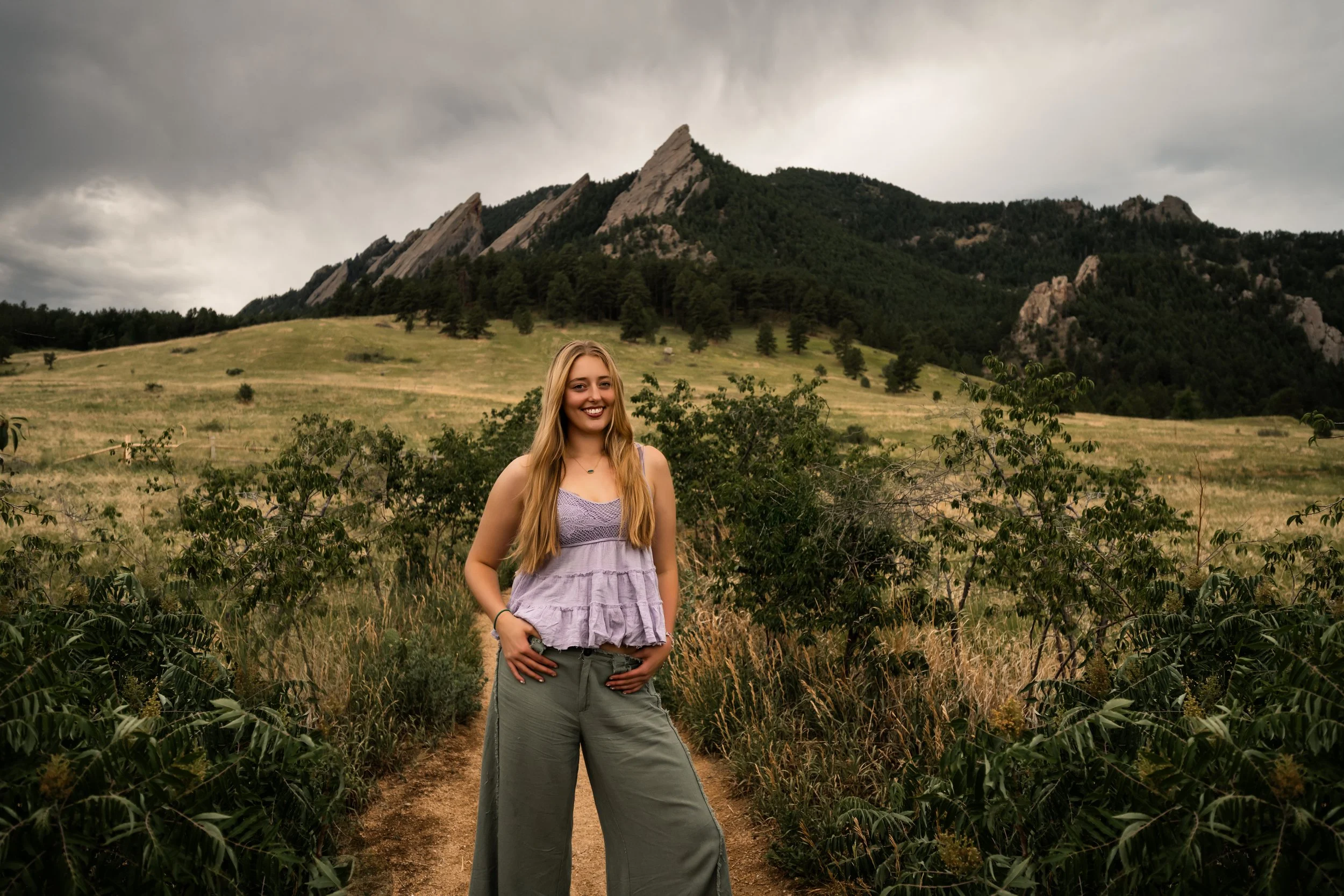
Senior year is about becoming — stepping into confidence, figuring out who you are outside of who everyone else expects you to be. A wide-open mountain landscape does something psychological for a teenager in front of a camera: it gives them room to be small against something big, and then, a few shots later, room to plant their feet and own the frame. That contrast — vastness and presence — is the whole visual story of this location.
The park also gives you range in a single session: the iconic green meadow with the Flatirons as a backdrop, quieter lower trails for a more intimate, editorial feel, and the historic dining hall and cottages if your senior wants a slightly more storybook, textured backdrop.
Timing: When to Shoot
Light and crowds move together at Chautauqua, so timing is really one decision.
Sunrise: Sunrise brings very few people — usually just a mountain climber or two — and direct light that lights up the Flatirons in a way sunset doesn't. The tradeoff is an early wake-up call, and the light turns harsh fast, often within about 45 minutes of sunrise.
Two hours before sunset: This is prime golden-hour territory — go later and the sun drops behind the Flatirons before you're done.
Weekday vs. weekend: Weekdays are noticeably less crowded than weekends, and weekends bring paid parking only, on top of the crowds. If your senior's schedule allows any flexibility, a weekday golden hour session is the sweet spot.
Parking: Parking is limited, especially on weekends and during popular hiking windows, so plan to arrive early and claim a spot in the main lot or on the side streets.
How to Dress: Guiding Your Senior
Seniors (and their parents) often ask what to wear, and Chautauqua rewards a specific approach: outfits that read as put-together but move like outdoor gear.
What works:
Solid, warm-toned or earthy colors — rust, olive, cream, denim, deep green — that hold up against gold grass and blue-gray rock rather than fighting it
Textures with a little movement: flowy dresses, oversized sweaters, open jackets that catch the wind
Boots or sturdy sneakers, always — this is a walking, uneven-ground location
One elevated "hero" outfit for the meadow shots, and one more casual, textured layer for the trail shots
What to avoid:
Busy patterns, logos, or neon — they compete with the mountain backdrop instead of complementing it
Anything with a hemline or sole that can't handle dirt, dust, or a sudden gust
Bring a change of shoes for the drive over. Nobody's outfit needs to survive the parking lot gravel before the shoot even starts.
Weather Prep, Season by Season
Boulder's weather at elevation changes fast, and Chautauqua sits right at the base of the foothills where that shows up most. Build weather contingencies into every booking conversation, not just the day-of text.
Spring (March–May): Green grass, wildflowers starting, but also mud season and afternoon snow squalls are common. Layer everything. Have your senior bring a packable jacket that can come off for the shot and go back on between setups. Waterproof boots are worth the ask.
Summer (June–August): Gorgeous light, but Colorado's classic pattern is clear mornings and thunderstorms by early afternoon — another reason to lean toward sunrise or early evening sessions. Sunscreen and a water bottle for both of you; there's real elevation gain if you head up the trails.
Fall (September–October): The most forgiving season — stable weather, warm color palette, golden aspens nearby if your senior wants a second location. Still bring a light layer for the temperature drop once the sun dips behind the Flatirons.
Winter (November–February): Stunning and underused. Snow-dusted Flatirons make for some of the most striking senior portraits in Boulder, but this is where dressing warm under the styled outfit matters — think thermal layers beneath the visible outfit, hand warmers in pockets between shots, and a realistic plan for how long skin can be exposed to wind before you're photographing chattering teeth instead of confidence.
Always in the bag: a lightweight umbrella (for shade as much as rain), a backup outfit in a garment bag, hand and toe warmers October through April, and a weather app you actually trust — mountain forecasts shift by the hour.
The Pros and Cons
Pros:
Unmatched, unmistakably Colorado backdrop — the Flatirons do a lot of the emotional work in these images for you
Real variety in one location: meadow, trail, historic buildings, all within a short walk
Off the main trail, the lower paths see a lot less foot traffic, which means fewer strangers wandering into frame and more of that flowing-field feeling
Golden light and mountain scale genuinely help nervous seniors loosen up and look less posed
Year-round shootability — every season offers something different
Cons:
Permit and insurance requirements add cost and admin before you ever pick up a camera
Parking is genuinely limited on weekends, and weekend visits mean paid parking on top of the crowd
No props allowed on the trails, so your styling and posing have to carry more of the creative weight
Weather changes fast enough that outdoor-only backup plans are a must, not a nice-to-have
Popular light windows (golden hour, weekends) mean you're often sharing the space with hikers, other sessions, and tourists
A Real Example: Working With Cloudy Skies
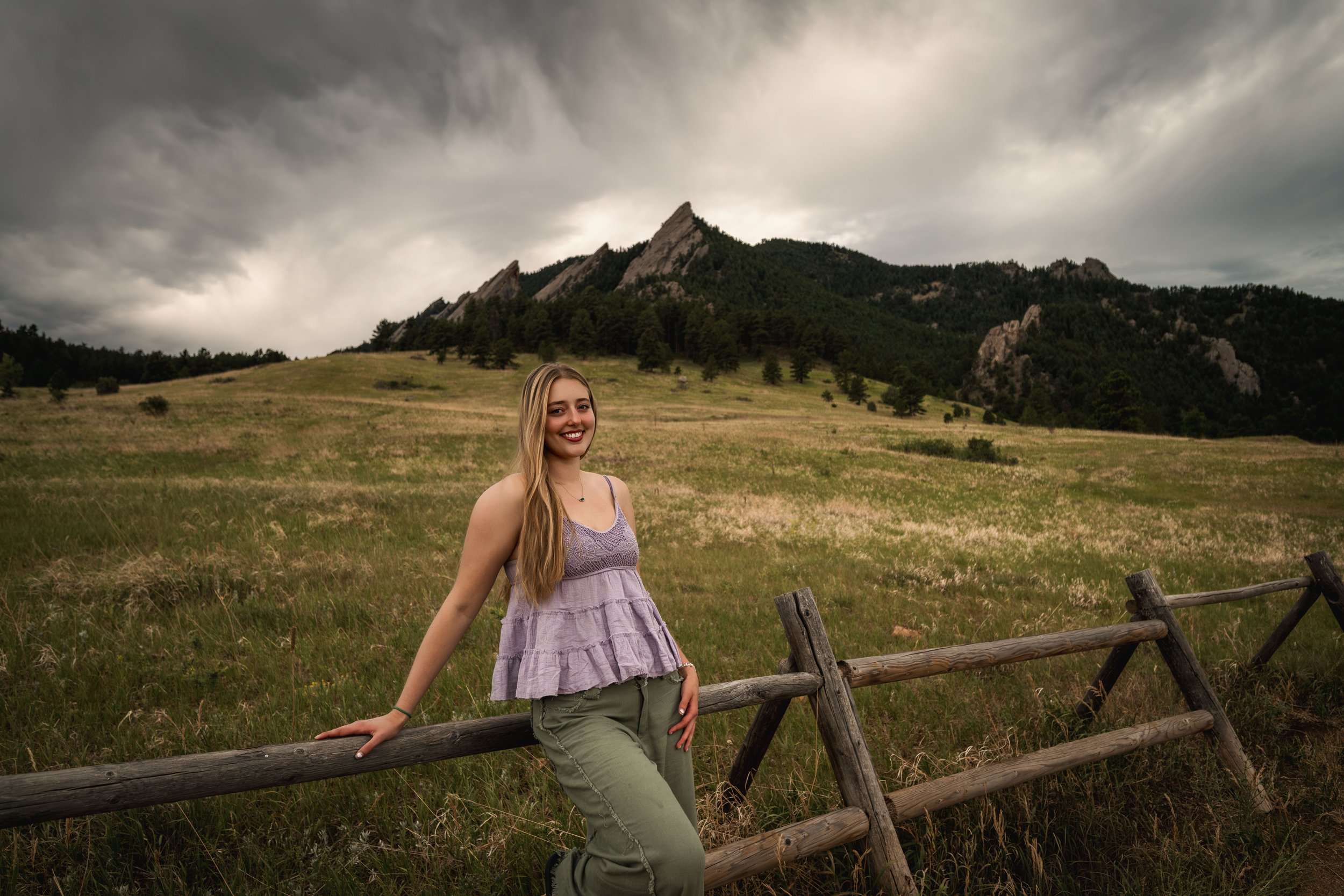
One of my favorite senior sessions at Chautauqua happened on a day that wasn't picture-perfect on paper — the sky was overcast, the golden hour glow I usually chase just wasn't there. Instead of fighting it, we leaned into it. Overcast skies act like a giant softbox: no harsh shadows, no squinting, just even, flattering light across the whole session. We got some genuinely beautiful shots because of the clouds, not in spite of them.
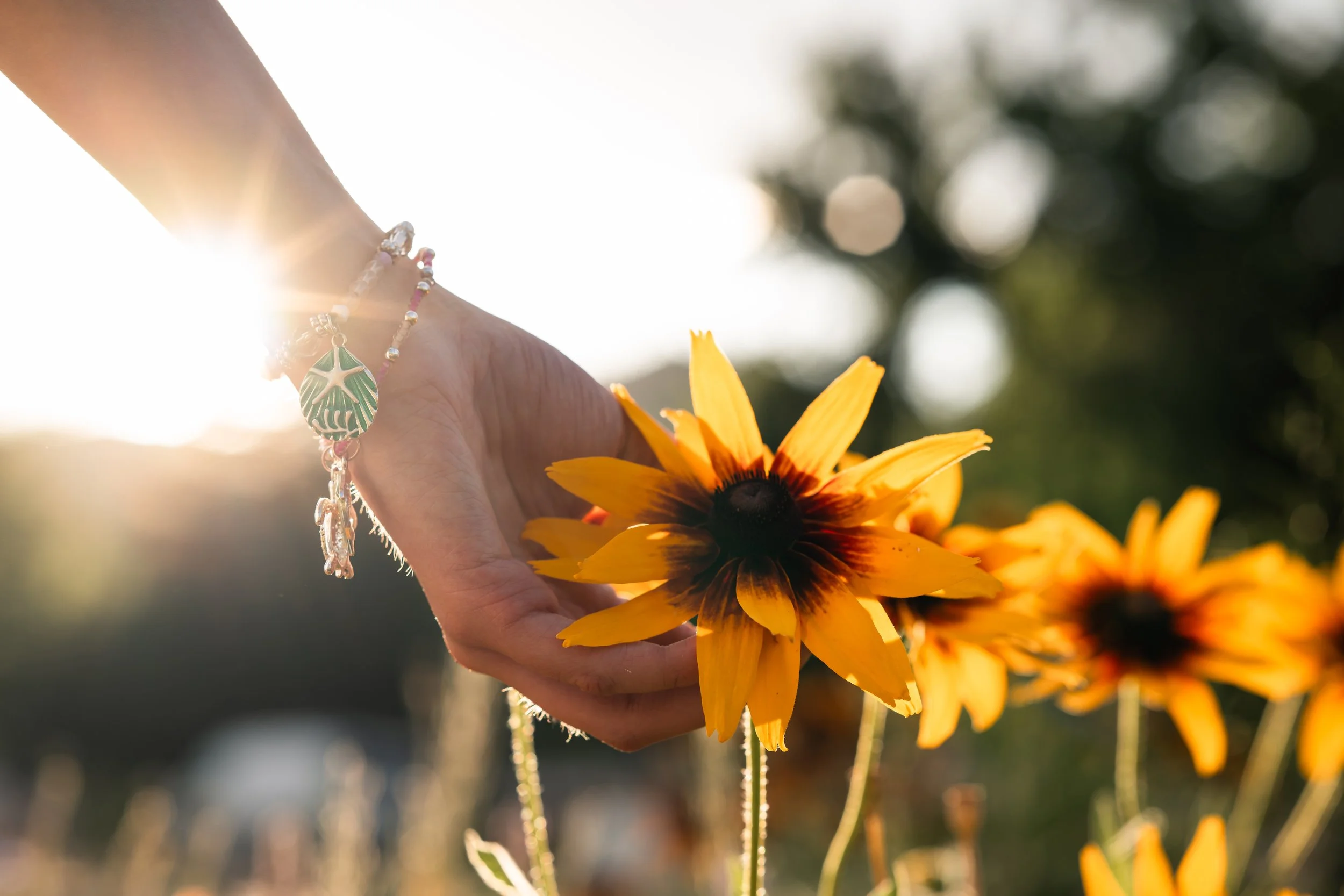
We didn't stop at the meadow, either. Nearby gardens gave us a burst of color and a completely different mood than the muted mountain palette — a nice contrast that let this senior's personality come through in more than one way. It's a good reminder that Chautauqua doesn't have to be the whole session; it can be the anchor, with a second or third location layered in to round things out.
Make It Unique to Them
Chautauqua is a fantastic starting point — but it's a starting point, not the whole story. Because it's such a popular location, it's easy for senior sessions there to start looking like everyone else's: same meadow, same angle, same golden hour glow. Part of my job is making sure that doesn't happen. Whether that means chasing the mood a cloudy sky gives you instead of waiting for it to clear, pairing the mountains with a nearby garden for a pop of color, or finding an angle most photographers walk right past, the goal is always the same: a set of images that looks like this senior, not like a template.
Before You Go: The Permit Situation
This is the part people skip and regret. Any photographer taking photos for commercial purposes at Chautauqua needs a permit from Boulder Open Space & Mountain Parks and senior sessions absolutely count, even if it's "just" one client. Rangers do check, and photographers without permits do get turned away.
Practical details:
The OSMP permit covers Chautauqua along with other popular Boulder photo spots like Lost Gulch, Flagstaff Mountain, and South Mesa Trail.</cite>
Pricing runs $50 for a limited annual permit covering up to 50 visitors a year, or $300 for an unlimited annual permit, and you'll need a certificate of insurance naming Boulder OSMP.</cite>
Permitted or not, you can't bring props like arches, chairs, tripods, portable changing rooms, or light stands onto the trails, since they damage the surrounding landscape.
The Bottom Line
Chautauqua rewards preparation more than almost any other Boulder location — get the permit sorted, get the timing right, and dress your senior for the mountain rather than the Instagram grid, and the park does the rest. It's one of the few places where the landscape itself seems to remind a teenager that they're about to walk into something big. That's worth the extra planning.
If you would like to see more senior pictures, click here to view the gallery.